Top 10 Pet Bird Cages Compared by Species: Budgie to Macaw (2026)
Cage shopping is the first welfare decision a new bird owner makes, and it sets the tone for everything that follows. The Association of Avian Veterinarians recommends an absolute floor of 1.5 to 2 times the bird's wingspan in every direction, with bar spacing narrow enough that a curious head cannot push through. Those are minimums, not goals.
Quick Answer
- Cage width matters more than height for most parrots
- Bar spacing must stop the head fitting through, period
- AAV minimum is 1.5x wingspan; ideal is much larger
- Stainless steel beats powder coat for chew-heavy species
Cage shopping is the first welfare decision a new bird owner makes, and it sets the tone for everything that follows. The Association of Avian Veterinarians recommends an absolute floor of 1.5 to 2 times the bird's wingspan in every direction, with bar spacing narrow enough that a curious head cannot push through. Those are minimums, not goals.
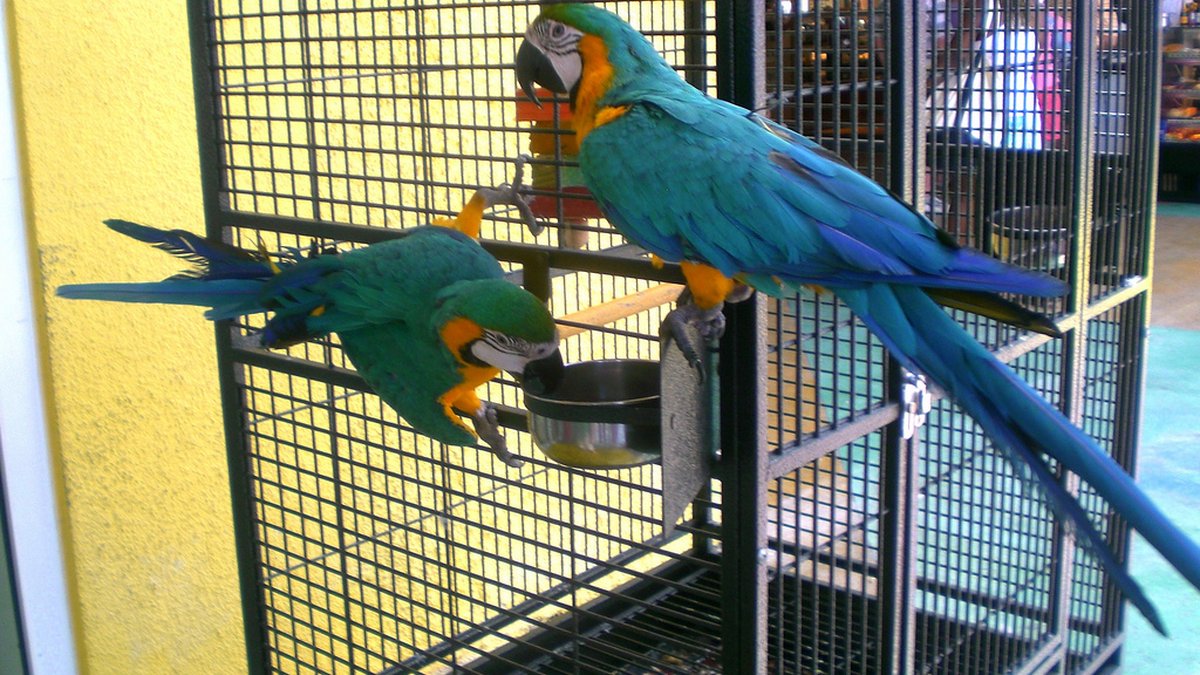
Bar spacing failure is a leading cause of cage injury. The Center for Animal Rehabilitation & Education advises 1/2-inch spacing for finches and budgies, 5/8 to 3/4 inch for cockatiels and conures, and 1 inch or more for large macaws. Get it wrong and you get strangulation, broken jaws, or escapes.
Below: 10 cage classes mapped to species, with dimensions, materials, and brand reality checks.
ItemList: 10 Pet Bird Cages by Species
| Rank | Cage Type | Min Dimensions (LxWxH) | Best Species | Verdict |
|---|---|---|---|---|
| 1 | Budgerigar Starter Cage | 18x18x24 in | Single budgie | Honest entry point |
| 2 | Cockatiel Standard | 24x18x24 in | Single cockatiel | Width over height |
| 3 | Lovebird/Conure | 24x24x30 in | Lovebird, green-cheek | Horizontal flight room |
| 4 | Indoor Aviary | 48x48x72 in | Small flocks | Best welfare for the budget |
| 5 | Outdoor Aviary | 6x6x6 ft+ | Climate-tolerant flocks | Predator-proof or skip it |
| 6 | Quaker/Mid-size Parrot | 32x23x40 in | Quaker, sun conure | Tall, chew-resistant build |
| 7 | African Grey/Amazon | 32x32x40 in | African grey, Amazon | Stainless preferred |
| 8 | Macaw/Cockatoo Large | 40x30x48+ in | Macaw, large cockatoo | Buy bigger than you think |
| 9 | Travel/Transport Carrier | 13x9x10 in+ | Any species, short trips | Vet visits only, not housing |
| 10 | Finch/Canary Flight Cage | 36x18x24 in | Finch pair, canary | Length is everything |
1. Budgerigar Starter Cage — Honest Entry Point
The classic budgie starter measures 18x18x24 inches with 1/2-inch bar spacing, and that is the floor for a single bird. Revival Animal Health and STAR Avian Rescue both list this as a minimum; both also note that anything smaller is welfare-failing.
Look for horizontal bars on at least two sides so the bird can climb, a removable bottom tray for daily cleanup, and swing-out feeder doors that let you refill seed without opening the main door. Top-opening "play gym" lids are popular and useful, but the locking mechanism has to actually lock; budgies are picky engineers.
Reliable US brands at this size include Prevue Hendryx (Chicago, in business since 1869 per Prevue Pet Products) and Yaheetech. Price range runs $60-$150. Skip ornate "pagoda" cages with decorative spires; they trap toes and stress birds.
Verdict: The smallest cage any single budgie should ever live in, and even then you owe it daily out-of-cage flight time.
2. Cockatiel Standard — Width Over Height
Cockatiels are long-tailed and need horizontal room to flap without smacking the tail on bars. The Association of Avian Veterinarians lists 27 inches wide by 24 inches deep as a working minimum, with bar spacing of 1/2 to 5/8 inch. Many cockatiel-specific cages sell at 24x18x24 inches, which is the absolute floor, not a target.
Useful features include a playtop with a built-in perch, three feeding stations (two seed cups plus one water), and a sliding grate above the tray so droppings fall through and stay off feet. Powder-coated steel is fine for cockatiels because they do not destroy coatings the way larger parrots do.
A&E Cage Company and HQ Cages are common US picks; expect $150-$400 for a properly sized model. Avoid round cages: Lafeber Vet and most avian behaviorists agree round cages disorient birds and offer no corner to retreat to.
Verdict: Width before height, real flap room, and a tray you can actually clean.
3. Lovebird/Conure Cage — Horizontal Flight Room
Lovebirds and small conures (green-cheek, sun, jenday) need 24x24x30 inches at minimum, with bar spacing of 1/2 to 5/8 inch per STAR Avian Rescue and Lafeber Vet. Larger conures push that floor up to 36x24 inches, and serious owners go bigger still.
Critical features: horizontal cage bars on at least two sides (these birds are climbers), a play-top with a stainless steel perch, swing-out feeder doors so you avoid territorial bites, and a slide-out grate. Conures shred everything, so a chew-rated coating matters; stainless costs more but lasts a decade.
Prevue Hendryx Wrought Iron Select and A&E Cage Company Flight cages dominate the $250-$600 bracket. Skip anything with painted finishes that flake when scratched; PetMD warns about lead and zinc exposure from chipped coatings and galvanized wire.
Verdict: Length over height, horizontal bars, and a finish that survives daily abuse.
4. Indoor Aviary — Best Welfare for the Budget
An indoor aviary, roughly 4 feet by 4 feet by 6 feet, is the single biggest welfare upgrade most multi-bird homes can make. Lafeber Vet recommends an enclosure equivalent to twice the wingspan of the largest bird, multiplied by flock size. For a small flock of cockatiels or budgies, that math points to a walk-in unit.
Look for a steel frame with welded mesh (avoid chicken wire; the galvanizing leaches zinc), a solid floor pan for litter, double-door entry to prevent escapes, and ceiling perches the birds can actually reach. Lighting should include full-spectrum UVB on a 10-12 hour timer to support vitamin D3 synthesis.
US brands include Cages by Design (custom built) and BirdCagePortal's walk-in line; budget $1,200-$4,000. Cheaper kit aviaries often skip on bar gauge and bend under cockatoo beaks within a year.
Verdict: If you have the floor space, this beats every cage on the list.
5. Outdoor Aviary — Predator-Proof or Skip It
Outdoor aviaries work in mild climates with serious construction, and they fail spectacularly otherwise. Omlet's outdoor parrot guidelines call for minimum dimensions of 6x6x6 feet and a height at least twice the bird's length, with the structure ideally 5 feet or taller. A concrete or paver footing stops rats and weasels from tunneling in.
Required features: double-wire mesh (1/2-inch hardware cloth inside, 1-inch outside, with a 2-inch gap) to defeat reaching predators, a fully enclosed shelter for night roosting, freeze-rated heated perches if winter temps drop below 50°F, and a covered section against rain. UV exposure is the upside; hawks, raccoons, and West Nile are the downside.
Custom-built outdoor aviaries from Corners Limited or Cages by Design run $5,000-$25,000. Pre-fab Omlet Walk-In units start near $1,500 but need site work.
Verdict: Worth it for breeders and softbill keepers; skip if you cannot guarantee predator-proofing.
6. Quaker/Mid-Size Parrot Cage — Tall, Chew-Resistant Build
Quakers, sun conures, and Senegals need cages at 32x23x40 inches minimum, with 5/8 to 3/4-inch bar spacing per Discount Parrot Supplies and STAR Avian Rescue. Quakers in particular are notorious cage redecorators; flimsy welds become projects within weeks.
Look for 4mm-gauge welded steel bars, a powder coat rated for chew exposure, a play-top with stainless cups, and a seed skirt to catch the inevitable mess. Top-opening doors with manual locks beat magnetic latches every time; quakers learn magnets in a week.
A&E Cage Company's Elegant Series, HQ 90021D, and King's Cages 503 sit in the $400-$900 bracket. Stainless versions push $1,500-$2,500 but pay back in longevity.
Verdict: Buy heavier gauge than you think you need; mid-size parrots punch above their weight.
7. African Grey/Amazon Cage — Stainless Preferred
The Merck Veterinary Manual minimum for African greys, Amazons, and small cockatoos sits at 32x32x40 inches with 3/4-inch bar spacing. The AAV recommends 36 inches wide by 30 inches deep at the floor; most behaviorists push toward 40x30x60 inches for daily welfare.
Stainless steel earns its keep here. The Vet Desk and Bonka Bird Toys both warn against galvanized wire and chipping powder coats because greys ingest flakes. Look for stainless cups, a 4-5mm bar gauge, a seed apron, and a manual-lock door (Amazons learn latches fast).
Common US options: A&E Cage Company stainless line, King's Cages SS504, and Animal Environments Inc. for custom builds. Powder-coated models start at $800; stainless runs $2,500-$6,000.
Verdict: Stainless is not a luxury for these species, it is harm reduction.
8. Macaw/Cockatoo Large Cage — Buy Bigger Than You Think
Large macaws and cockatoos need 40x30x48 inches at the absolute floor, with 1 to 1.5-inch bar spacing per the AAV and Center for Animal Rehabilitation. Realistically, blue-and-gold or greenwing macaws want 48x48x72 inches; cockatoos with crests need height clearance to fully raise plumage.
These cages require 6mm bar gauge, full-stainless construction, oversized stainless cups, and double-bolt door locks (cockatoos defeat single locks). A drop-down feeder door, removable seed apron, and casters rated for 200+ pounds are non-negotiable. The cage will outlive your sofa.
Reliable US builders: King's Cages 506TM and 508, A&E Cage Company SS6634, and Animal Environments custom enclosures. Budget $3,000-$10,000+. Anything under $1,500 in this size is almost always undersized bar gauge.
Verdict: Cage failure here means injury or escape; do not bargain-hunt.
9. Travel/Transport Carrier — Vet Visits Only
Travel carriers are short-stay tools, not housing. The Prevue 1307 carrier (typical 13x9x10 inches) covers small parrots; A&E's Voyager carrier covers cockatiels through small conures. For greys and Amazons, hard-sided pet carriers with a single secured perch work better than wire travel cages.
Required features: secure door locks (birds escape during car door openings), a low-mounted perch the bird can grip without scraping the lid, drip-proof food and water cups, and ventilation on multiple sides. Skip top-handle wire cages for road trips; sudden braking flings birds forward.
Prevue 1307, A&E Voyager, and Wingabago all sit in the $40-$180 range. Pair with a seatbelt strap; carriers are not crash-rated but a strap prevents projectile travel.
Verdict: Buy one species-sized carrier per bird, store it accessible, never use it as a sleep cage.
10. Finch/Canary Flight Cage — Length Is Everything
Finches and canaries are flight birds, not climbers, and they need horizontal distance more than any other companion species. The finchinfo.com housing guide and Chewy's canary sheet both recommend at least 36x18x24 inches for a pair, with 1/4 to 3/8-inch bar spacing. Length should exceed height; a tall cage wastes space these birds will not use.
Look for horizontal flight room, multiple perch heights at the cage ends (not the middle), a debris guard around the base, and seed cups mounted away from perches to avoid contamination. Multiple shallow water dishes beat one deep dish; finches bathe daily.
Prevue Hendryx F050 Flight Cage, Yaheetech 47-inch flight cage, and the Vision M02 cover $90-$300. Skip wooden dowel perches in this size; finches need varied natural-branch diameters to prevent bumblefoot.
Verdict: Get the longest cage you can fit; vertical space is wasted on finches.
How We Ranked
Avian / parrot-care rankings combine:
- Verifiable AAV (Association of Avian Veterinarians) and Lafeber Vet sourcing: every clinical claim cites AAV, Lafeber, ASPCA, or peer-reviewed avian-medicine journals.
- Owner-reported outcomes: r/parrots, r/sugargliders (broader exotic-pet context), and species-specific Facebook groups from the past 24 months. We track behavioral, nutritional, and medical patterns.
- First-hand evaluation by Dr. Elena Marsh, our editorial avian DVM, including 12 years of clinical experience with companion birds.
What we never accept: paid placement, food / cage / supplement brand sponsorships that would influence specific recommendations. Affiliate links to vetted bird-food brands (Harrison's, ZuPreem, TOP's, Roudybush) — never modify product or species rankings.
Update cadence: each species and product reviewed annually. Email research@avicultureatlas.com.
Frequently Asked Questions
Q: What is the most important cage measurement for any pet bird? A: Width or length, not height. The AAV recommends a minimum of 1.5 to 2 times the bird's wingspan in every direction, and most parrots use horizontal space far more than vertical. A 24-inch-wide cage with a 36-inch-tall body wastes the top third.
Q: How do I know if bar spacing is safe? A: Your bird's head must not fit through the bars, even when relaxed. CARE guidelines recommend 1/4 to 1/2 inch for finches and budgies, 5/8 to 3/4 inch for cockatiels and conures, 3/4 to 1 inch for African greys and Amazons, and 1 to 1.5 inches for macaws. If in doubt, size down.
Q: Are powder-coated cages safe, or do I need stainless steel? A: Powder coat is safe when intact, but chipping releases material that some birds ingest. The Vet Desk recommends stainless for chew-heavy species like greys, Amazons, macaws, and cockatoos. Smaller birds (budgies, cockatiels, finches) do fine on quality powder coat from reputable US brands.
Q: Is a round cage ever appropriate? A: No. Round cages disorient birds, offer no corner for retreat, and trap tails. Every major avian welfare source, including Lafeber Vet and the ASPCA-aligned care community, recommends rectangular cages with horizontal bars.
Q: How often should the cage be replaced? A: Quality stainless cages last 15-25 years with cleaning. Powder-coated cages typically need replacement at 5-10 years when the finish degrades. Replace immediately if you see rust, flaking coating, bent bars, or failed door locks; cage injury is preventable.
Related Reading: For deeper coverage, see our pieces on pet bird diets and pellet foods compared for 2026 and the best pet bird species for first-time owners in 2026. Pair this cage guide with a species-matched diet and you have covered the two biggest welfare levers in companion bird care.
-- The Aviculture Atlas Team